OpenMemory
Sole product designer · Mem0 · 2025
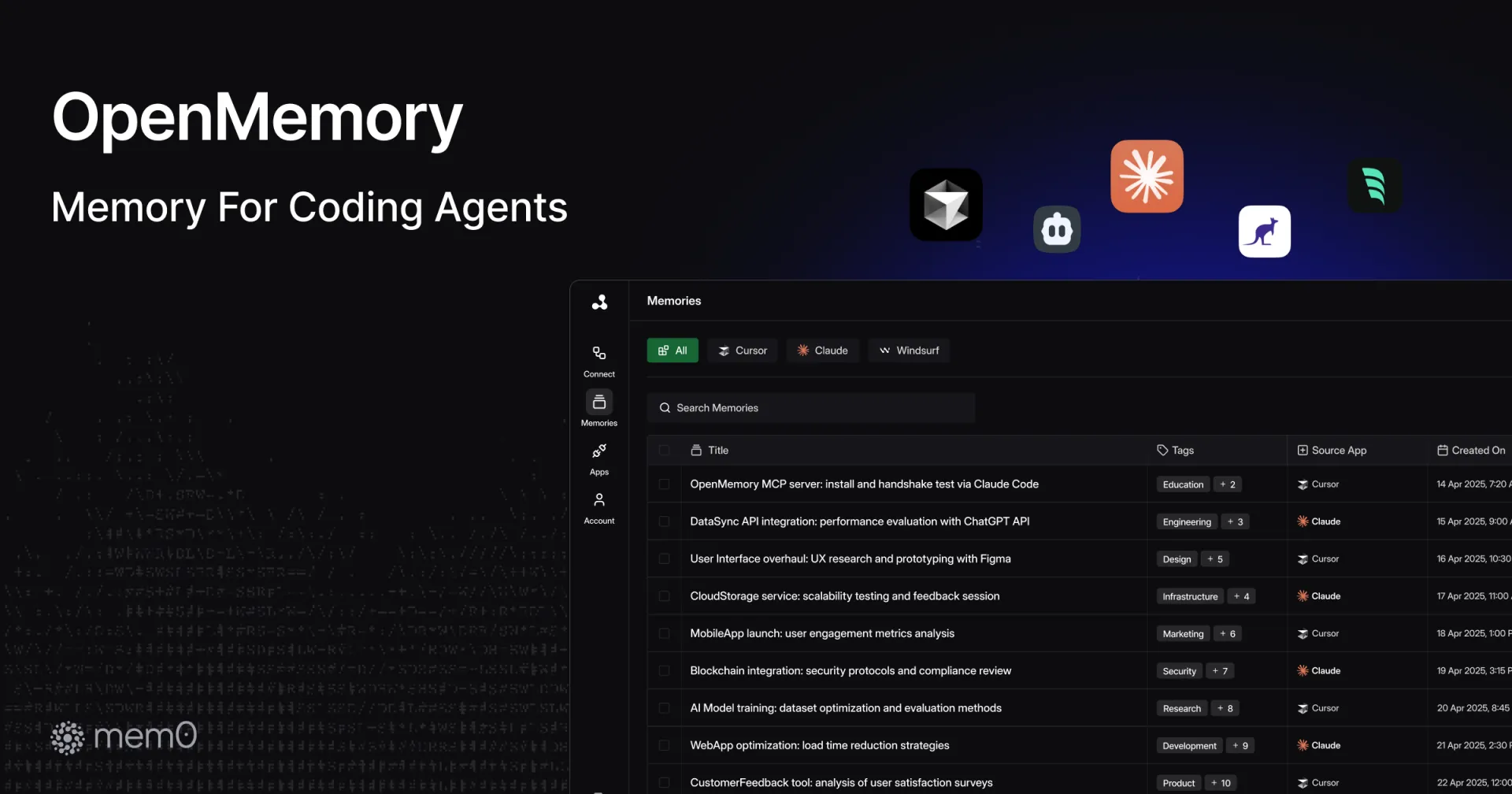
Coding agents start every session from scratch. OpenMemory is the product that fixes that: install it once and your agent in Cursor, VS Code, Claude Code, or any MCP-compatible tool remembers how you work and gets the right context fed to it automatically. I designed it end to end and carried it through launch, where it reached 10k+ users.
OpenMemory was Mem0's move from an API developers integrate to a product developers install. That shift is the heart of the project: memory had to become something you set up in minutes and trust with your work, with the whole loop, capture, organize, and recall, designed to feel automatic. I owned the product design end to end and carried it to launch.
The memory loop. The product runs on one loop: it captures your coding preferences, patterns, and setup as you work, organizes them, and delivers the relevant ones back to your agent when they matter. The design goal was for that loop to disappear, the developer keeps coding, and the agent quietly gets smarter about how they work.
Memory types for precise recall. Not every memory is the same kind of thing. I designed OpenMemory to tag each one by type, a user preference, an implementation detail, and so on, so the agent pulls the right kind of context instead of a flat pile. The typing is what makes recall feel precise rather than noisy.
Project-scoped memory. Context is only useful in the right place. OpenMemory pulls the memories that match the current project or repo, so an agent stays on track without the developer prompting it by hand. Scoping memory to the project was a core decision that kept recall relevant as a user's memory grew.
Privacy and audit control. Developers will only trust memory they can see and govern. The access logs show every memory that was added, edited, or served, with tagging, versioning, and visibility rules. This is the trust surface of the product, designing it well is what makes someone comfortable letting a tool watch how they work.
Install once, works everywhere. OpenMemory had to feel native across Cursor, VS Code, Claude Code, and any MCP-compatible agent, from a single install. Designing one setup that serves project-scoped memory to that many different agents and IDEs was the systems constraint underneath the product.
The launch. I designed the launch surface, the OpenMemory page and how the product is positioned, and it grew to 10k+ users.
From an API a developer integrates to a product a developer installs, trusts, and keeps. That was the jump, and OpenMemory is the proof I can make it.